
See the world clearly again.
SMILE PRO, LASEK, ICL and cataract surgery, planned and performed by Dr. Dongju Yeom, founder of Gangnam Smile Eye Clinic. One honest recommendation: what is truly right for your eyes.
The right correction starts with your eyes, not a trend.
Every recommendation follows a full eligibility exam. No single procedure is the safest for everyone, so Dr. Yeom recommends only what your eyes truly need.
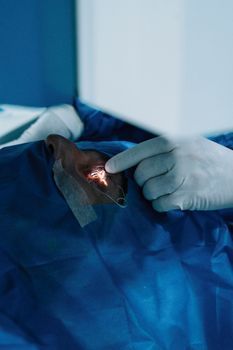
Signature · Flap-free
NEW SMILE PRO
ATOS SmartSight with CenTrax® automated centration, eye-rotation compensation and 0.05 D planning. First introduced in Korea at this clinic.*
Explore SMILE PRO →
No tissue removed
EVO & ECHO ICL
A lens implant for high myopia, thin corneas or dry eye.
Explore ICL →
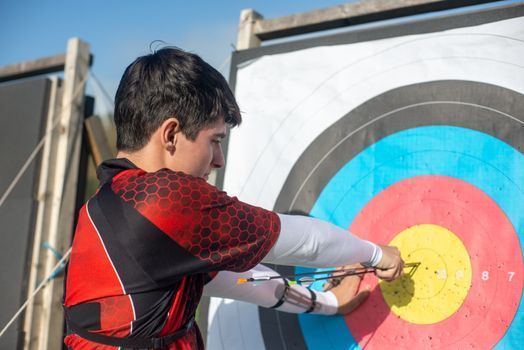
For athletes
2DAY LASEK
No-touch surface laser. No flap, built for contact sports.
Explore LASEK → 2 mm incisionNEW SMILE LASIK
Lenticule extraction with a dedicated operating room. Most patients resume daily life the next day.*
Learn more → Presbyopia & CataractLaser cataract surgery
LENSAR® + CENTURION®, about 10 minutes, with a lens chosen around how you live.
Learn more → Not sure?Compare all procedures
SMILE vs LASIK vs LASEK vs ICL, side by side: flap, recovery, who each suits.
See the comparison →
“An eye clinic is where people entrust us with one of the most important decisions of their lives.”
Dr. Dongju Yeom founded Gangnam Smile Eye Clinic and personally leads its Vision Correction and Presbyopia & Cataract centers. His principle is simple: there is no single safest procedure, only the one that is right for your eyes.
Individualised procedure selection in refractive surgery: a measurement-first approach
Dongju Yeom, M.D., Ph.D. 1 · 1 Founder, Gangnam Smile Eye Clinic; ophthalmology residency, Seoul Paik Hospital
Background
Laser vision correction reshapes the cornea by removing tissue, while phakic intraocular lenses correct refraction without altering corneal structure. Each approach has a distinct safety envelope, defined primarily by residual corneal tissue, corneal biomechanics and anterior-chamber anatomy. [1,2]
Assessment
Every candidate undergoes refraction (including cycloplegic or dilated refraction), pachymetry, corneal topography/tomography, tear-film evaluation, pupillometry, intra-ocular pressure, anterior-chamber measurement and retinal examination. Tomographic screening for subclinical keratoconus precedes any laser recommendation. [3]
Selection framework
| Clinical finding | SMILE PRO / LASIK | 2DAY LASEK | ICL |
|---|---|---|---|
| Adequate corneal thickness, mild–moderate myopia | Often suitable | Suitable | Possible |
| Thin cornea | Limited | Often considered | Often preferred |
| High myopia | Case-dependent† | Case-dependent† | Often preferred |
| Ocular-surface dryness | Small incision may help | Treat surface first | Cornea preserved |
| Contact sports / trauma risk | No flap | No flap | Case-dependent |
| Keratoconus / unstable cornea | Not advised | Not advised | Specialist assessment |
† Corneal cross-linking may extend laser options in selected cases. Table is educational and does not replace individual examination.
Conclusion
Precision technology (automated CenTrax® centration and cyclotorsion compensation, 0.05 D planning, femtosecond-laser cataract surgery) supports, but never substitutes for, careful measurement and clinical judgement. [4,5]
Dongju Yeom, M.D., Ph.D.
Ophthalmologist · Vision Correction & Presbyopia/Cataract · Founder & CEO, Gangnam Smile Eye Clinic, Seoul
I. Education
II. Specialty Training
III. Appointments
IV. Professional Societies (Full Member)
V. Clinical Interests
“Clear vision is the beginning of a better life.” Statement of practice · Dr. Dongju Yeom
Credentials as published by Gangnam Smile Eye Clinic. Education · Memberships · Experience
Further reading, selected by Dr. Yeom’s clinic
Plain-language articles for patients, with key terms defined below.
- SMILE, LASEK or ICL: how Dr. Yeom chooses the right procedure Vision Correction · Procedure selection
- Thin corneas and vision correction Candidacy Factors · Pachymetry
- Keratoconus screening before laser surgery Candidacy Factors · Corneal tomography
- What makes NEW SMILE PRO different from conventional SMILE Vision Correction · Centration & cyclotorsion
- Laser-assisted vs traditional cataract surgery Cataract & Presbyopia · Femtosecond laser
- EVO ICL vs ECHO ICL: what’s the difference? ICL · Phakic intraocular lenses
- Cataract in your 40s: why it’s becoming more common Cataract & Presbyopia · Epidemiology
- Halos and glare after vision correction Vision Correction · Visual quality
- Diopter (D) Unit
- The unit of a lens’s focusing power. Myopia is written as a minus value, e.g. −3.00 D.
- Lenticule SMILE
- A thin disc of corneal tissue shaped by a femtosecond laser and removed through a small incision to correct refraction.
- Pachymetry Measurement
- Measurement of corneal thickness, central to judging how much tissue can be safely treated.
- Cyclotorsion Alignment
- Slight rotation of the eye when lying down; compensating for it improves astigmatism correction.
- Phakic IOL / ICL Lens implant
- A lens placed inside the eye while the natural lens is kept, correcting vision without removing corneal tissue.
- Capsulotomy Cataract
- The circular opening made in the lens capsule during cataract surgery, created by laser in LENSAR®-assisted surgery.
From first message to clear vision in three steps.
Most international patients complete the exam, surgery and early follow-up within one week in Seoul.
Message the team
Share your prescription and dates on WhatsApp, email or the booking form. Replies in English or Mongolian.
Exam & consultation
About two hours of precise measurements, then Dr. Yeom explains which options are genuinely safe for your eyes.
Treatment & follow-up
Surgery scheduled around your plans, a next-day check, and follow-up records for your home doctor.
Precision for eyes that can’t miss.
The clinic reports treating Olympic archery champions An San and Kim Woo-jin, athletes whose careers depend on perfect sight.
Kim Woo-jin
An San
*Clinic-reported figures and results from Gangnam Smile Eye Clinic. Individual results vary. Watch patient stories →

International patients
Flying to Seoul for your eyes? We’ll plan every day of it.
Plan about 5–7 days for SMILE and 7–10 days for LASEK or ICL. English line and WhatsApp +82-10-5772-0210, Mongolian line +82-10-4380-0210.
Questions patients ask Dr. Yeom.
Can’t find yours? Browse all 24 answers or message the team.
Who is Dr. Dongju Yeom?
The founder and CEO of Gangnam Smile Eye Clinic in Seoul. He trained at Inje University College of Medicine (M.D., Ph.D.) and Seoul Paik Hospital, served as Chief of Ophthalmology at Yeoncheon Medical Center, and is a full member of KOS, KSCRS and ESCRS. Full profile →
Which procedure is right for me?
It depends on your corneal thickness, prescription, tear film and lifestyle, all measured at the eligibility exam. Compare SMILE, LASIK, LASEK and ICL →
I was told I can’t have LASIK. Do I have options?
Often, yes. Depending on the reason, LASEK, SMILE with cross-linking or an ICL lens implant may still be possible. See your options →
How long should I stay in Seoul?
As a general guide, plan 5–7 days for SMILE and 7–10 days for LASEK or ICL. Travel timing →
How much does it cost?
Pricing depends on the procedure and your measurements. The clinic provides a personalized quote after consultation. Fees & insurance →
Where is the clinic?
4F & 6F Tongyeong Building, 405 Gangnam-daero, Seocho-gu, Seoul, steps from Gangnam Station Exit 10. Map & hours →
Your eyes deserve an honest recommendation.
Book an eligibility exam and consultation with Dr. Dongju Yeom. Find out which options are truly safe for your eyes, and which aren’t.